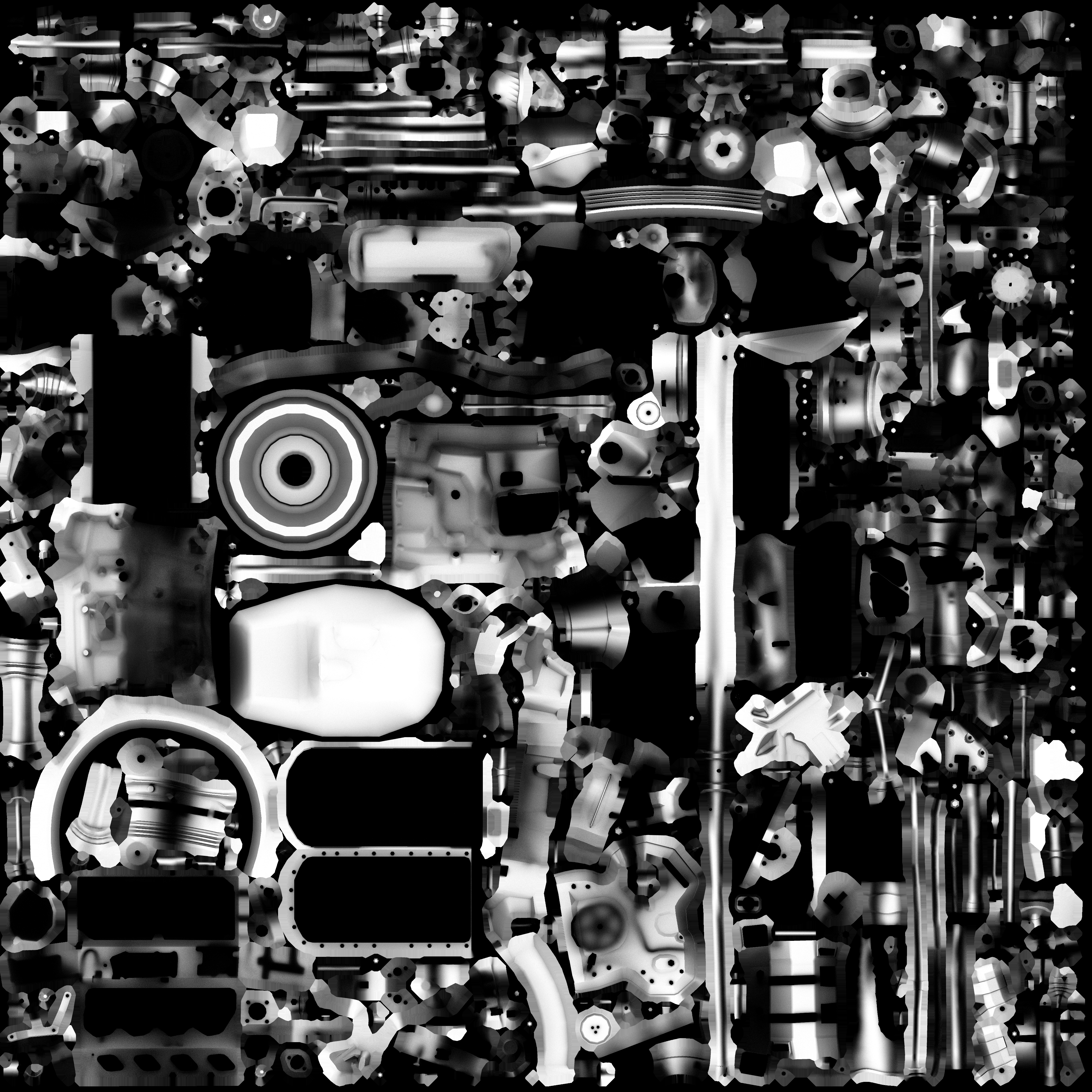
4K Bake Quality Review
A production AO bake using the model’s authored UV layout, reviewed across exposed surfaces, deep recesses, dense hose routing, and mechanically layered contact zones.
21-Second Walkthrough
Narrated review of the bake method and the strongest AO evidence areas.
Six Evaluation Renders
Each frame uses the baked AO as the visible surface signal so contact shadows and cavity response can be judged directly.
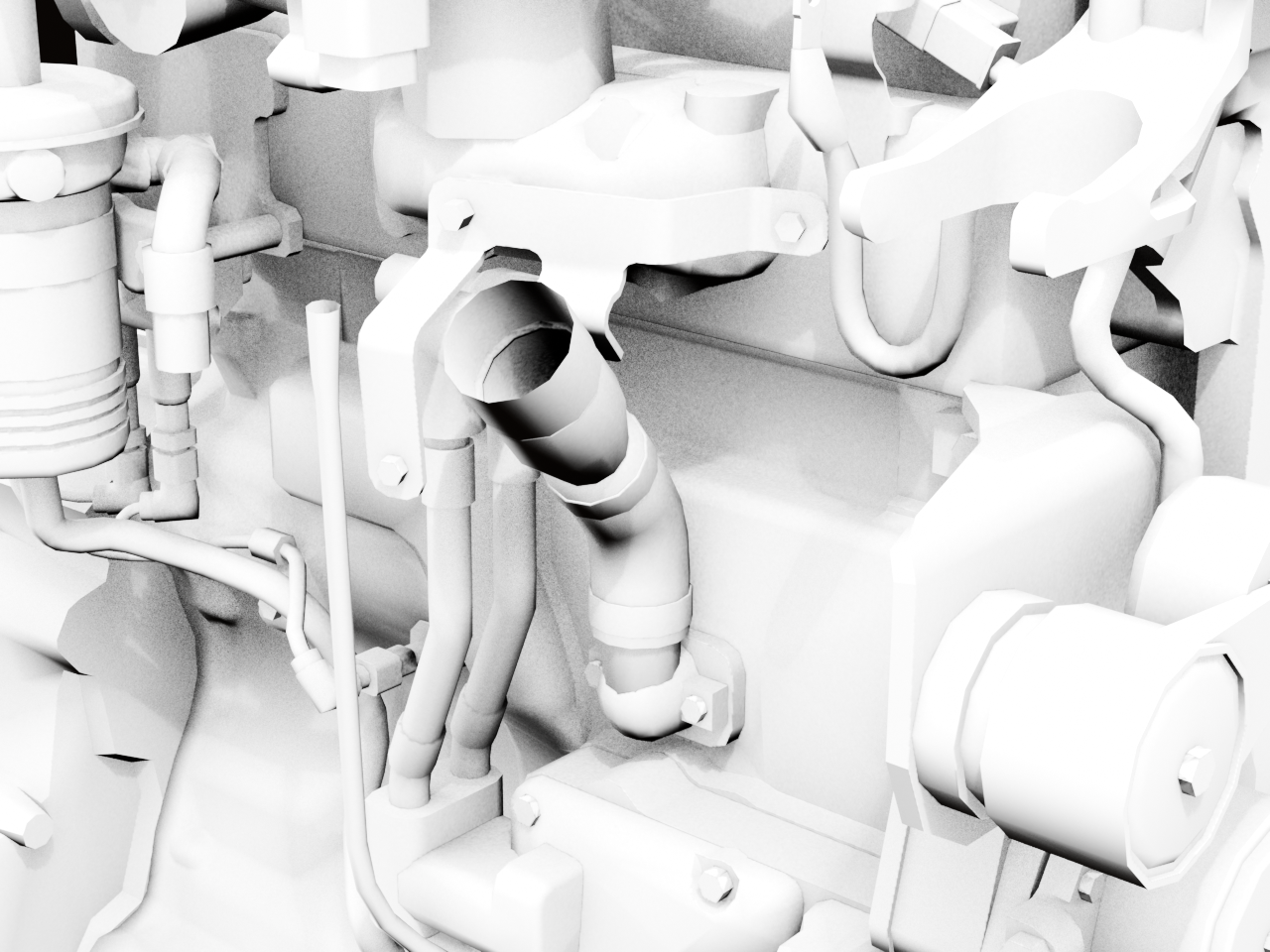
01 / Front Pulley
Strong separation around the circular housing, fasteners, brackets, and adjacent pipe intersections.
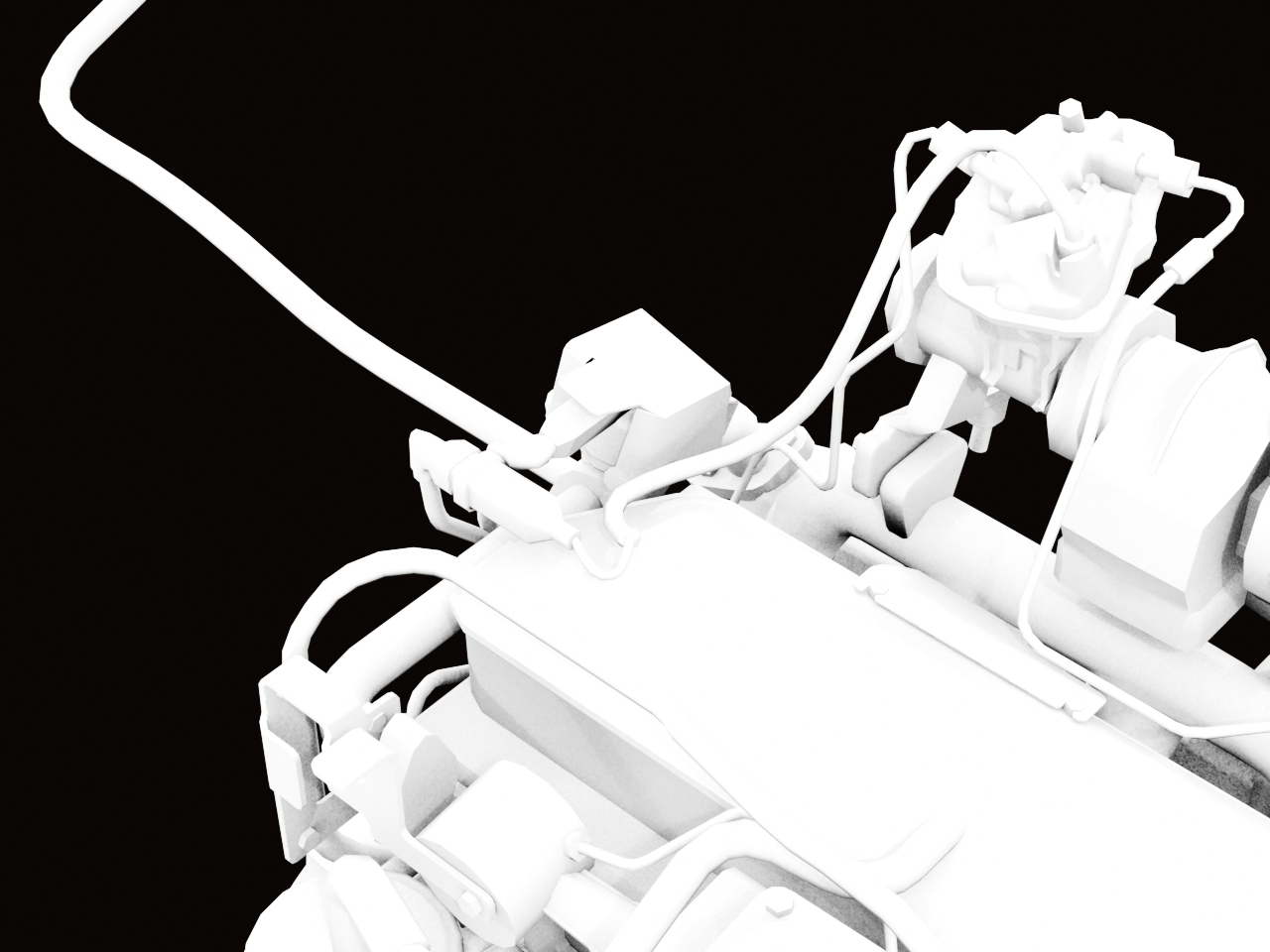
02 / Upper Hose Routing
Dense lines remain readable without collapsing into black, confirming useful local ray distance.
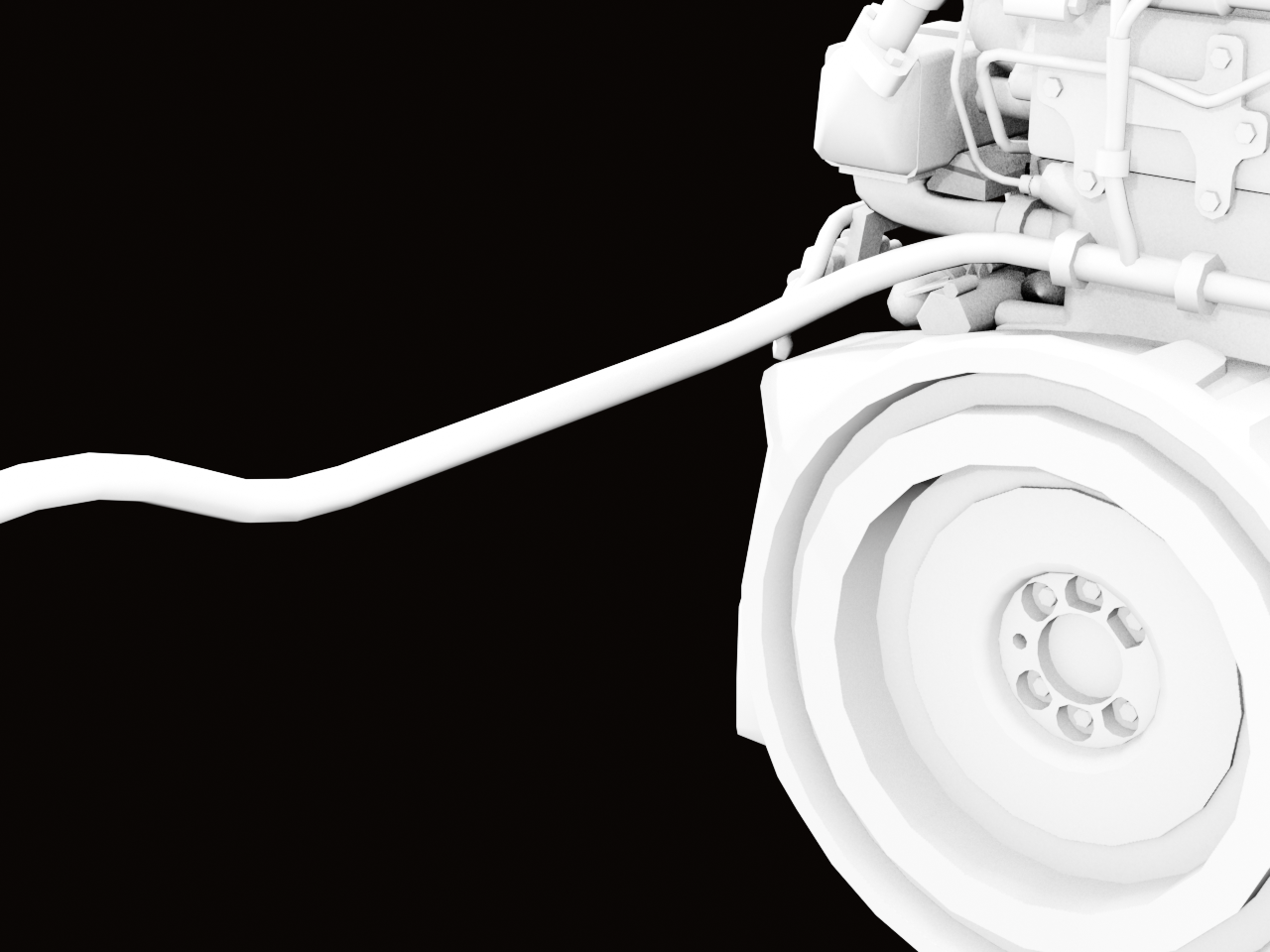
03 / Filter Cluster
Cylindrical forms, mounts, and neighboring surfaces retain clean contact shadow gradients.
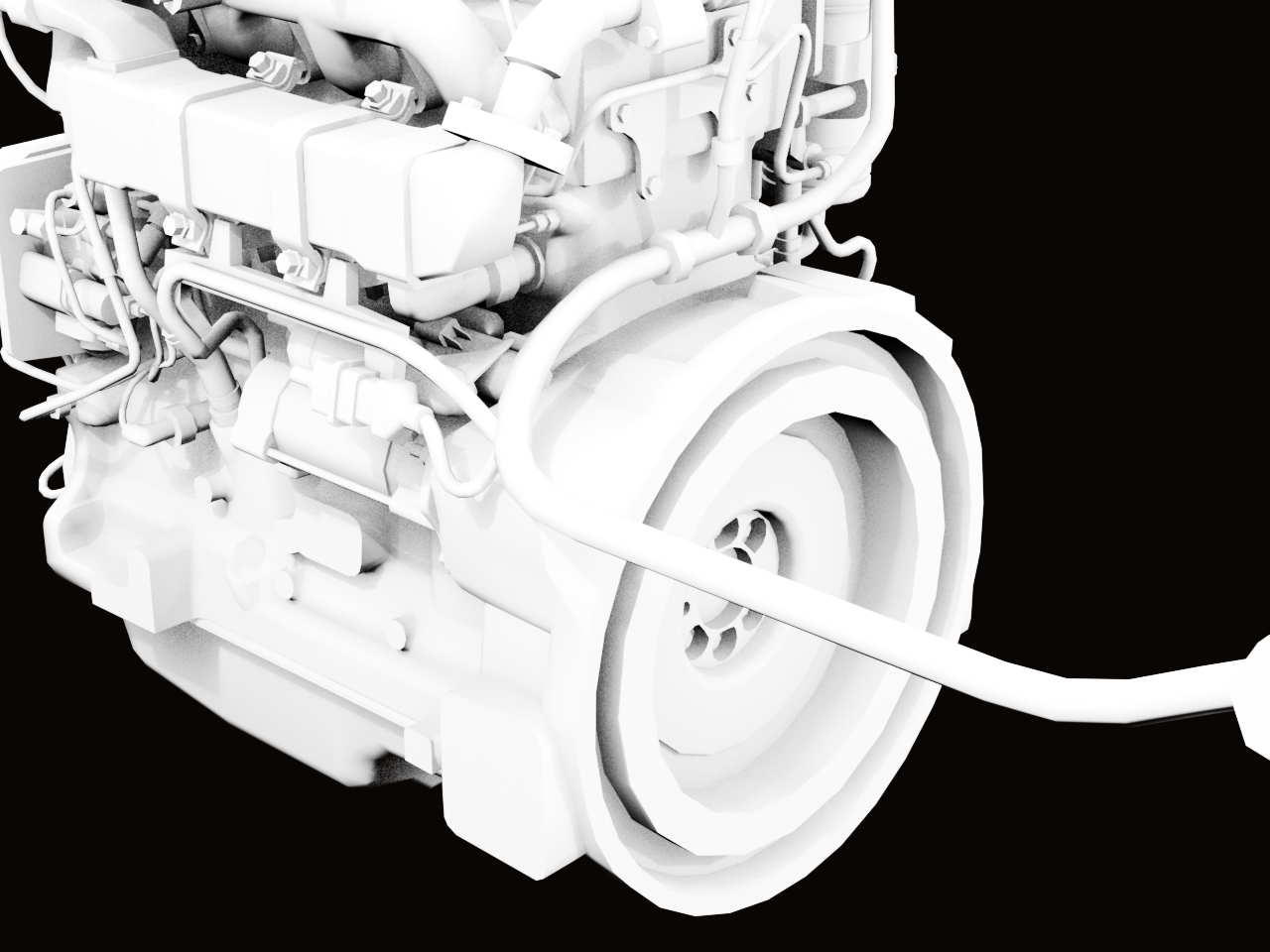
04 / Rear Manifold
Tight recesses show depth while exposed faces stay light, demonstrating correct AO polarity.
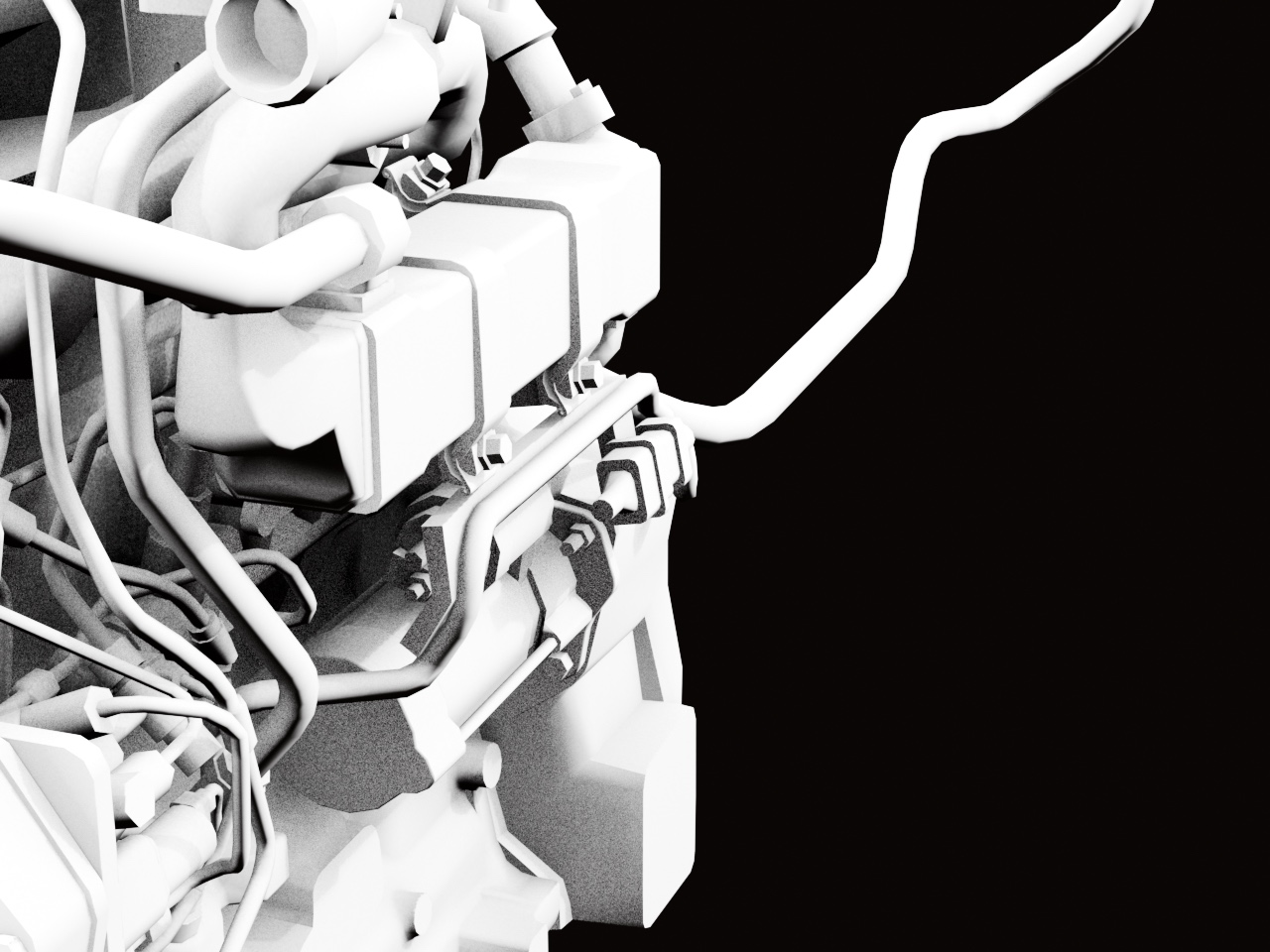
05 / Side Block
Layered housings, hose bundles, and clamps show consistent local occlusion and edge readability.
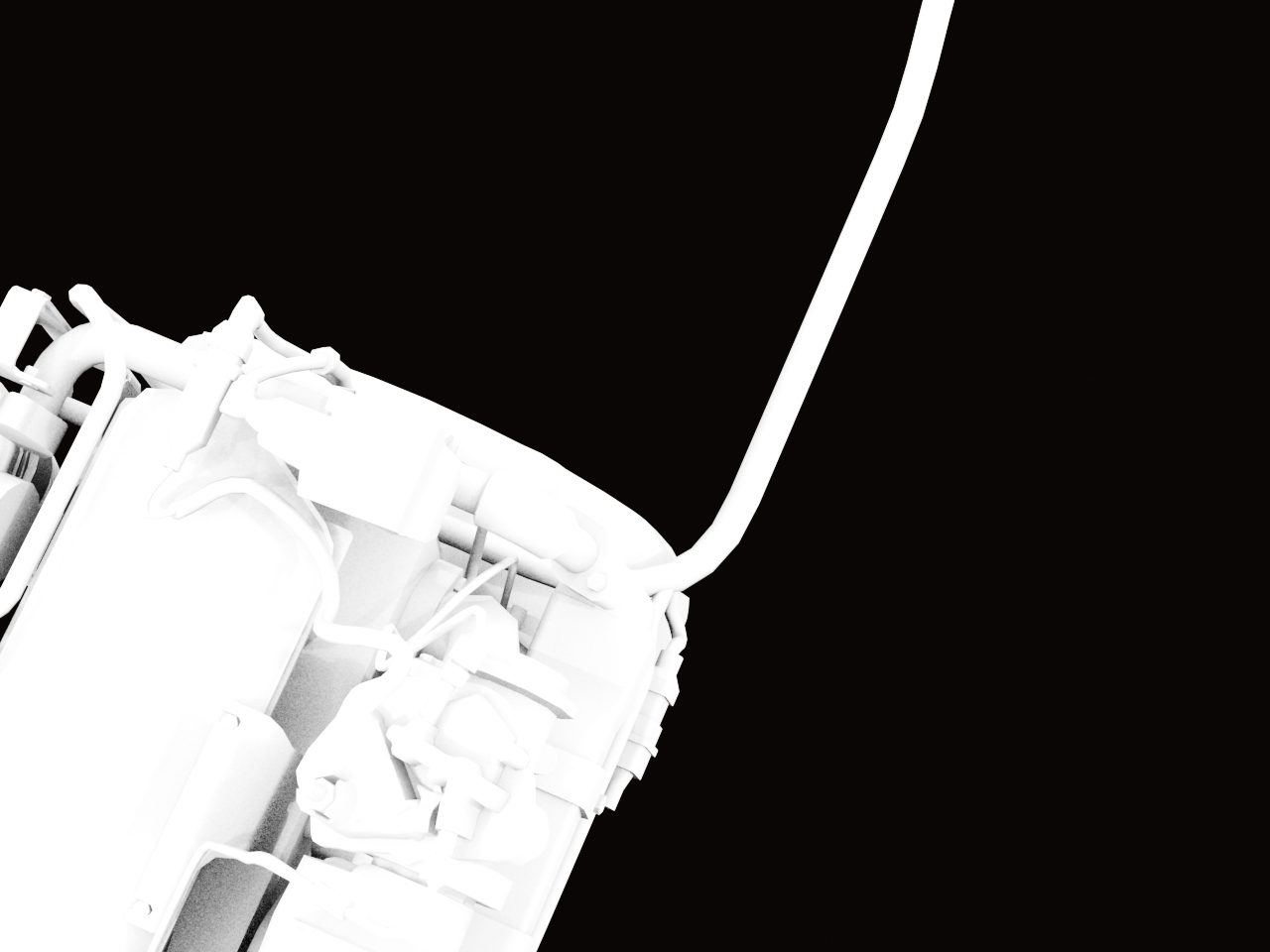
06 / Top-Down Check
Secondary coverage angle for the upper assembly; useful for spotting missing islands or inverted cavities.
Final AO Atlas
White is unoccluded; black is occluded. Black outside the UV islands is unused texture space.