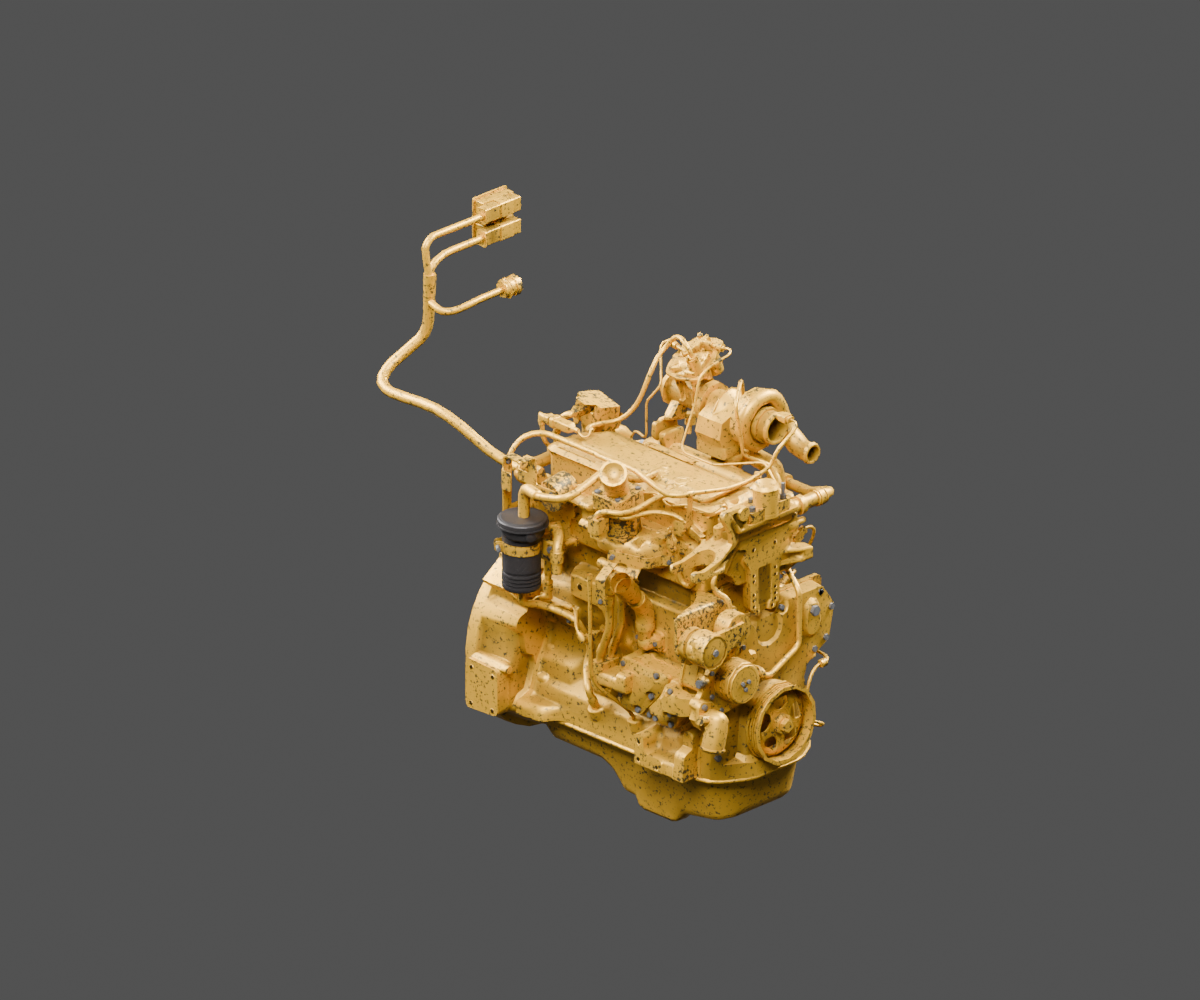
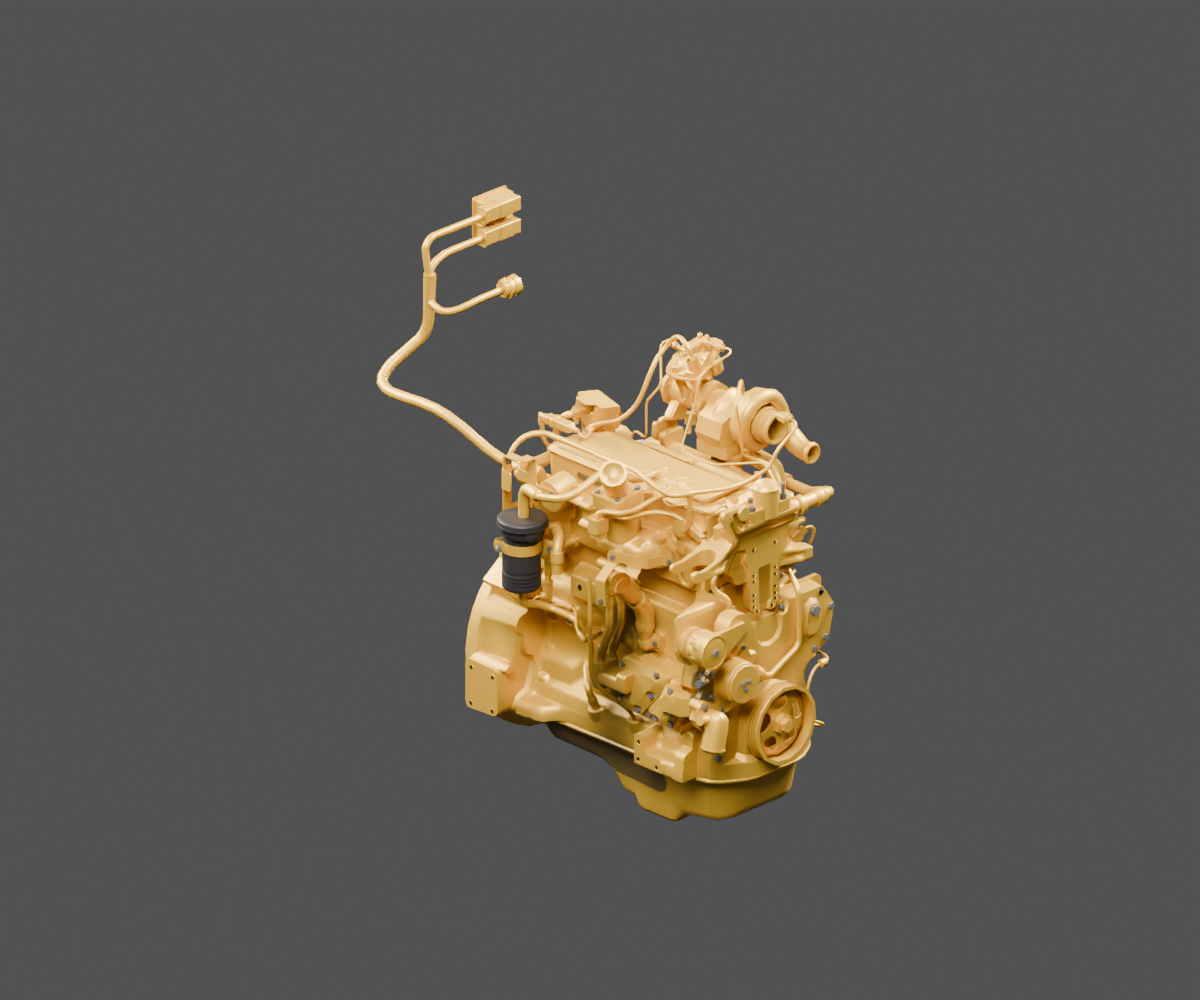
Wear Where Work Happens.
Reference-guided r3 · localized wear · intact paint between damaged areas
Unity channel contract: R metallic · G ambient occlusion · B emission · A smoothness. Import mask as linear data; normal as Normal map (+Y). This custom packing is not a universal stock Unity mask layout.
Method, fidelity and review limits
After examining real used engines, the distributed r2 chip mask was discarded. Six deliberately placed service-contact regions limit chips to cover, sump and housing edges. Two asymmetric downward stains and joint grime replace broad noise. Noise only roughens damage boundaries; it does not scatter chips. Previously generated Tripo microdetail is retained, with no new Tripo generation. The before view is rejected r2, not the original supplied texture.
Tripo's main-body maps were native 4K; small-part maps were 1K/2K, baked into the original 4K atlas. This viewer loads the original FBX bytes and remaps MAES correctly for Three.js. Normal display uses browser/GPU decoding, while the delivered normal stays 16-bit. White emission tint is a preview assumption; keep your Unity material's actual tint/intensity. Browser/Blender checks are not Unity-engine testing or artist approval.
Real-Engine Reference Study
These real used engines informed the distribution of wear, not an exact five-year age match. Large painted surfaces remain intact; damage and contamination are concentrated and asymmetric.
- 4045T Power Tech — side and rear photos: strongest damage at exposed support hardware, cover rims and mounting feet; older example, not the target age.
- 4045 electronic takeout — listed 7,705 hours: upper paint remains coherent while lower service areas show heavier dark contamination.
- 4045HF285 industrial unit — listed 4,954 ECM hours: large clean coated areas contrast with dirt and oxidation on selected exposed hardware.
Matched Blender Views